

Hello! Exciting news, GTD Flow App is open to paid members as of today. Sign in with the email you subscribe with on Substack here — you’ll get a link, no password. If it’s your first time, check spam, and if you just subscribed give it up to 30min to sync.
I’m going to keep the price static for a day or two but will be raising it — so if you’re thinking of joining I’d do so to lock in the current rates for life!
Before the walkthrough, a bit on why this exists.
Why I built it
The last eight weeks I was on paternity leave, and I spent most of the few quiet hours I had building, testing, and tearing this thing apart. Becoming a dad made something obvious fast: I’m not going to be glued to screens all day anymore. So the question I kept asking was, how do I get what I actually need to make a good trade without spending hours digging through flow and charts? GTD Flow is the answer I came up with.
The goal was simple on the surface and heavy underneath. Everything you need on a normal day is on one screen. If you want to dig, the Database has the full history with filters. Under the hood it’s a lot: the app reads the entire options tape every session from raw OPRA data, clusters fills into orders, figures out which side each trade was on, filters out the arb and stock-tied junk that makes most flow feeds noisy, and grades what’s left. That part took far longer than I expected and was much harder than I thought going in. But for a V1, I’m proud of where it landed! Would have been much easier if CBOE Trade Alert didn’t discontinue lol.
What’s in it
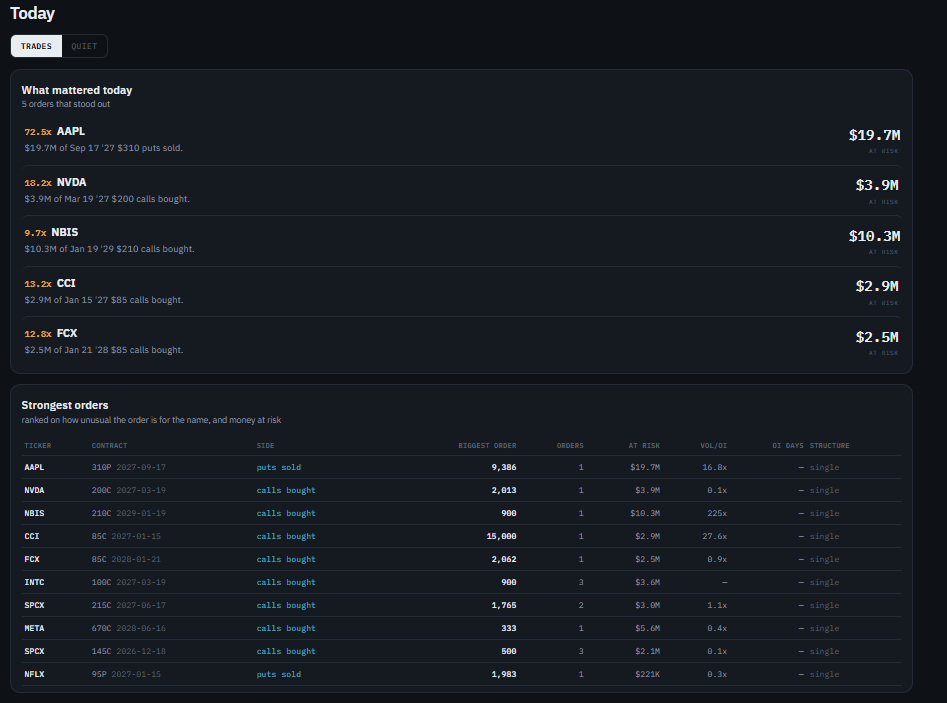
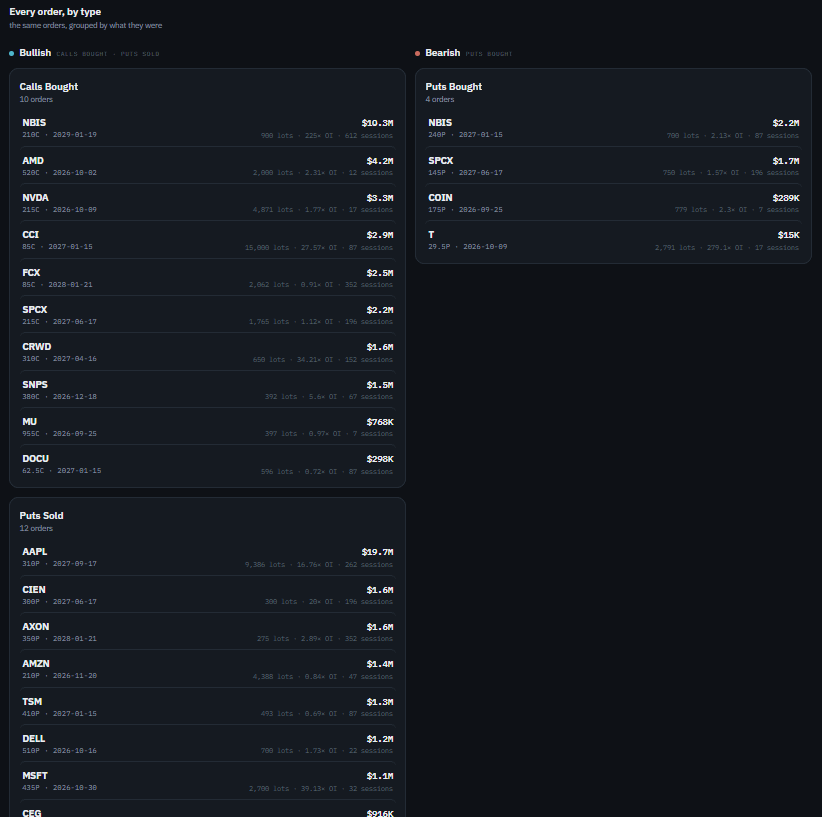
Today is the landing page. Five statements at the top telling you what mattered this session in plain English, then the day’s institutional orders in four buckets: Calls Bought, Puts Bought, Puts Sold, and Spreads. Ranked on how unusual the trade is for that name, not on raw dollars. A $500K order in a stock that never trades options matters; the same order in NVDA is a drop in the bucket.
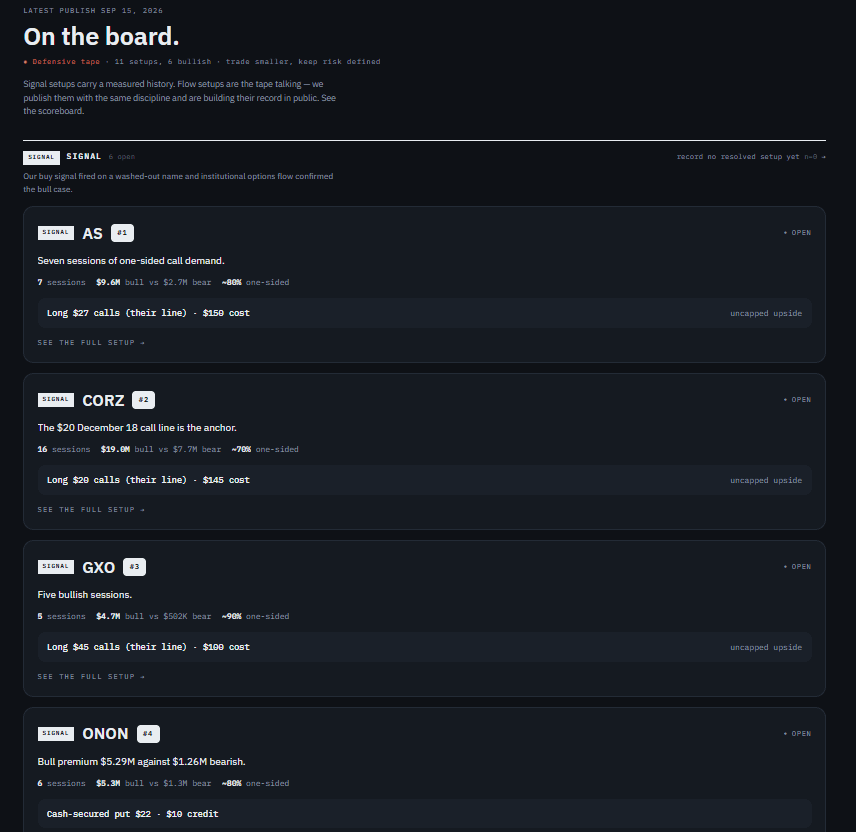
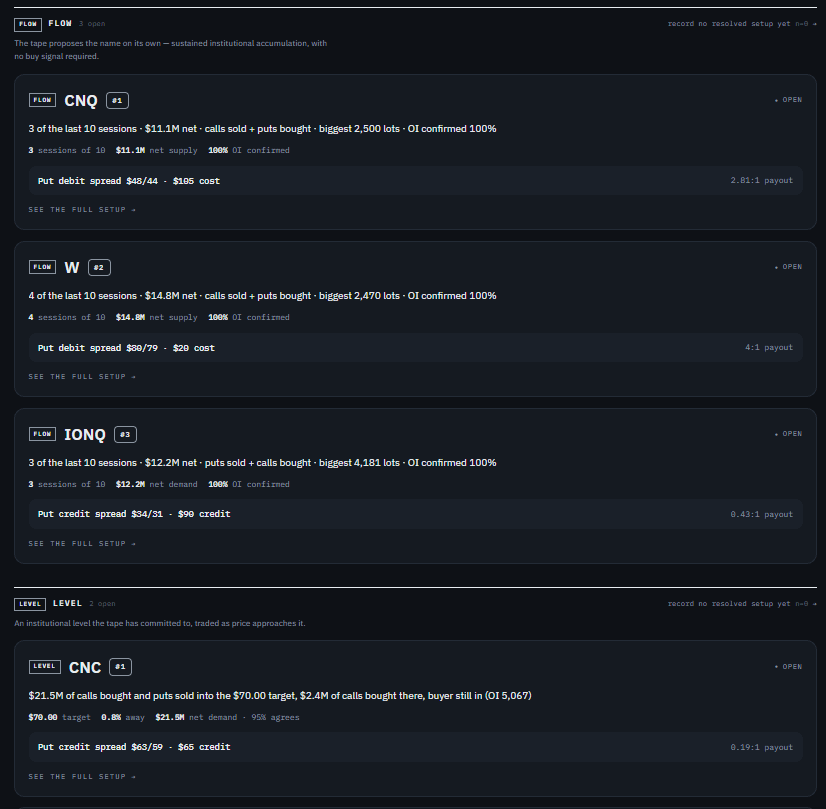
Setups tab is the core of it. My indicator (the green and red dots you’ve seen on my charts) runs against every stock in the market. When the buy signal fires on a name and institutional options flow agrees, it gets ranked and posted as a setup with an entry zone, the level where the idea is wrong, and two or three ways to play it with options, max loss shown on every one. Some weeks there are five. Some weeks there are none, and the page says why. Alongside the signal setups, there are two newer families — Flow (names the tape is relentless on, no signal required) and Level (heavy flow into a price institutions have committed to). Those are building their record in public; the badges tell you which is which.
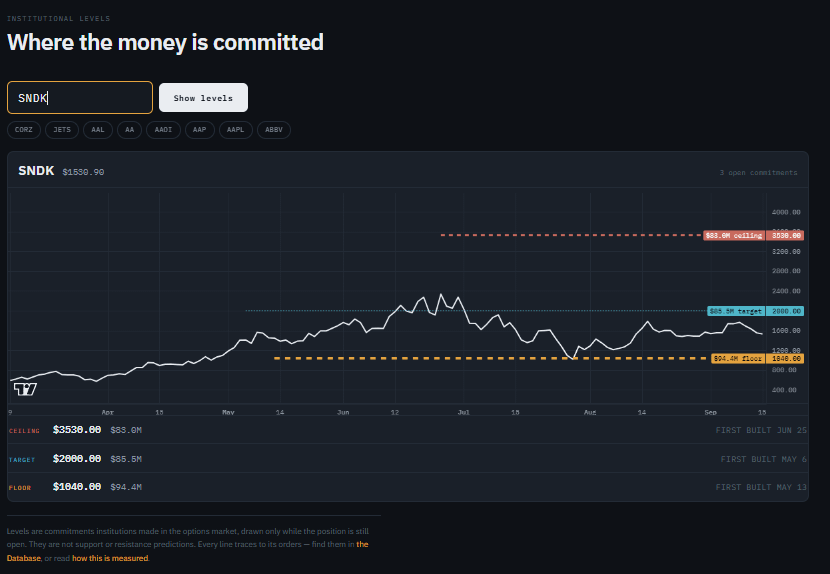
Levels is the page I thought was pretty cool to build out. Search any ticker and you get a chart with three lines: a floor where institutions sold puts (they committed to buy there), a target where they bought calls, and a ceiling where they sold calls. The lines fade when the position closes, and appear when the position was opened, so what you see is live.
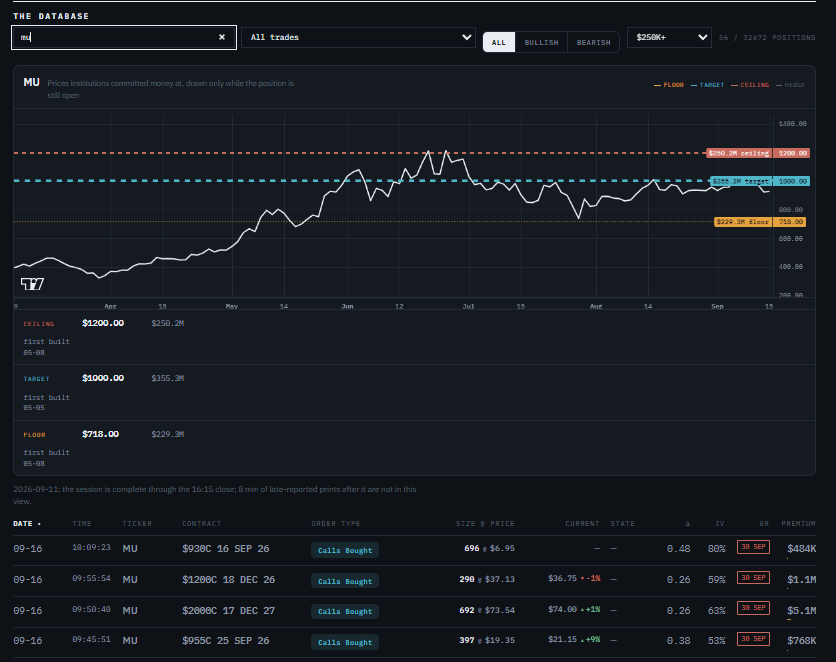
Database is search. Any ticker, every open institutional position, back to when it was put on. Click a row for the receipts.
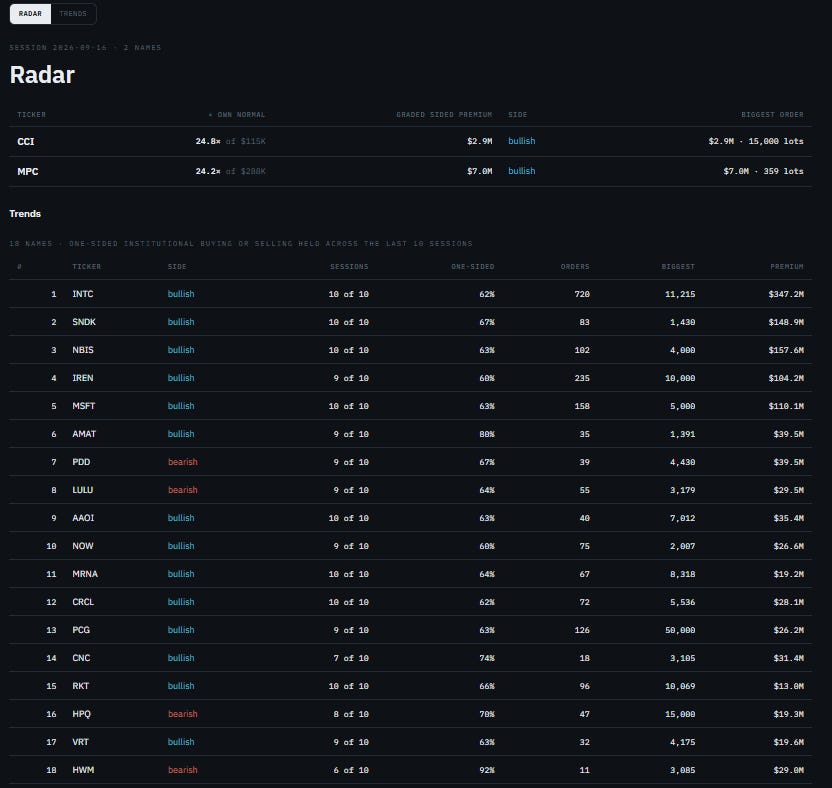
Radar is discovery: names seeing unusual flow today versus their own normal + a trend section for running 10 sessions:
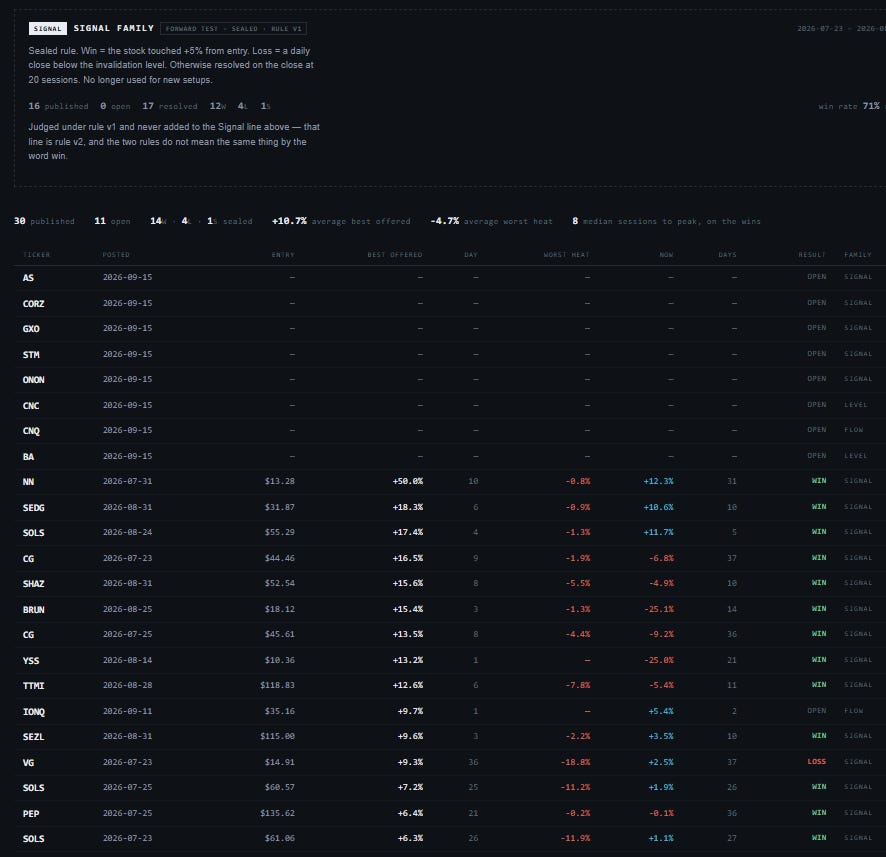
Record is every setup ever published, scored to resolution, wins and losses both. It’s public. That’s the whole point of it — every setup gets tracked from the day it posts, so the track record builds in real time and you can check it instead of taking my word. It will measure from when a setup was posted, how much drawdown was taken prior to max runup on a name and how many days it took to play out. We consider a trade a win if the stock hits +10% from entry prior to the invalidation level.
How I use it
Morning, before the open: Today, then Setups. Two minutes. If something new posted overnight, I read the card and decide whether it’s for me.
Midday, if I have a minute: Today refreshes during the session, so I glance at what’s printing.
Evening: this is when I actually think. Database on anything I’m in or watching. Levels on names I’m considering. Radar to see what got loud in names I’d never have searched. Record to see how the open setups are doing.
That’s it. The flow on the app updates intraday in real time but nothing here needs you to react in real time. The thesis windows are weeks, not minutes.
What to expect going forward
Weekly Substack post with the setups I find interesting, plus anything I enter myself. Entries and exits go in the Discord and Substack chat as they happen, along with updates on my open book.
Discord for intraday commentary and questions. I’m in there and thats best place to reach me if needed.
The app keeps getting better. This is a V1. I’ll be building new features, fixing what you tell me is broken, and upgrading data as the member base grows. If something looks wrong, say so — if a trade’s mislabeled I want to know, and it becomes a rule.
This is an ongoing project and I’m going to lean on all of you for feedback and ideas. Thanks for being here for it and hope you enjoy!